Night Shift, New Voters: Inside the Rolling Registration Rides Reaching Farmworkers Where They Are
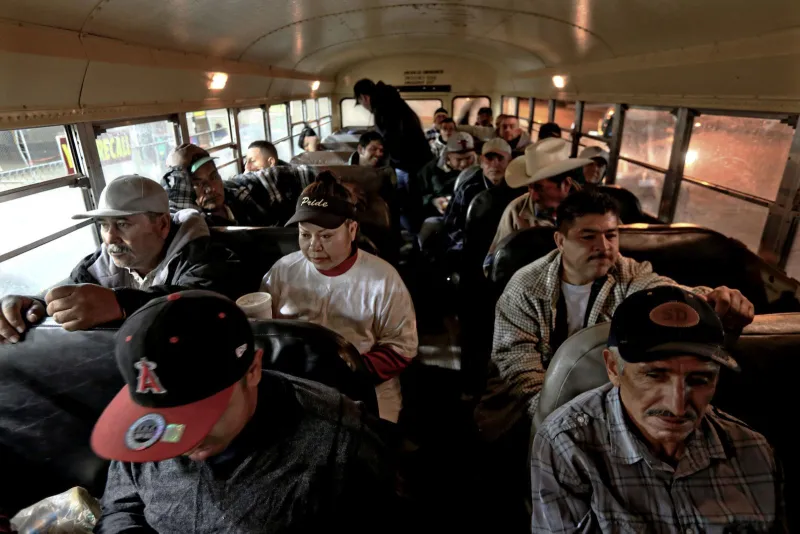
Photo: farmworkers boarding shuttle van at night shift change California, via grist.org
At 9:40 on a Tuesday night, the parking lot outside a Ventura County packing plant is nearly empty except for a white shuttle van with a folding table set up beside its sliding door. The table holds clipboards, pens zip-tied to the table, and a laminated sign in two languages: ¿Vas a votar? / Are you voting?
The workers filing out of the plant — hairnets coming off, lunch bags in hand — don't have to detour anywhere. The registration drive is parked directly in the path of their ride home. That's the whole point.
Meet the Van
The crew running this table calls their operation a rodante de votos — a rolling vote. It's a loose network of about two dozen volunteers, most of them bilingual, several of them former or current farmworkers themselves, who coordinate with shuttle drivers and grower-adjacent transit programs to register voters during the dead minutes of a shift change.
"Nobody's going to drive to an office after working twelve hours," says Marisol, a volunteer who asked to use only her first name because she still picks up shifts in the fields. "So we stopped asking them to. We go where the ride already goes."
The model is simple and stubborn. Volunteers ride along on night-shift commuter shuttles — the vans and buses that move agricultural and service workers between distant towns and even more distant workplaces. Between pickup and drop-off, they work the aisle the way a snack vendor would, clipboard in hand, registering eligible citizens, checking registrations, and answering questions about mail ballots and deadlines.
The Ride Is the Organizer
Transit time is a strange kind of gift. A forty-five-minute van ride from Santa Maria to Oxnard is dead time for the driver's employer but pure opportunity for an organizer. There's nowhere for the conversation to go — literally — so it goes somewhere.
Volunteers have learned the rhythm. Don't pitch on the first five minutes; people need to decompress. Lead with water bottles and heat advisories, not politics. Answer the question nobody says out loud: is this safe? Registration records are public in most states, which surprises people, so the crew walks through what's shared and what isn't, and lets folks decide with full information.
"The biggest barrier isn't apathy," Marisol says. "It's logistics stacked on logistics. A shift that ends at ten. A bus that leaves at ten-fifteen. A registration deadline nobody told you about. Remove one of those and you get a voter."
From the Coast to the Valley
The operation has started stretching beyond Ventura. A second crew now runs a loop into the southern Central Valley, coordinating with church vans and a produce warehouse that quietly allows a table at its shift change. The volunteers trade notes in a group chat: which shuttle routes skew eligible, which plants are hostile, which counties have upcoming registration cutoffs.
The numbers are modest by campaign standards — a few hundred registrations a month — but the conversion rate would make a consultant weep. These aren't cold contacts. These are neighbors who share a van twice a day, five days a week, with someone they trust.
Why This Works When Fancy Doesn't
Political strategists love to talk about "targeting." The rolling registration crews have a blunter theory: meet people at the exact point of exhaustion and make the ask small. A registration form takes four minutes. A shuttle ride takes forty. The math is on the organizer's side.
There's a deeper lesson here for anyone building power in working-class communities. Civic participation doesn't fail because people don't care. It fails because the infrastructure of participation was designed for people with nine-to-five schedules, cars in the driveway, and English as a first language. Flip any one of those assumptions and you flip a voter.
The Long Game
On the night I rode along, the crew registered eleven people before the last van emptied out. Eleven sounds small. Multiply it by every packing plant, warehouse, car wash, and hotel in every county in California — and then by Nevada, Washington, Texas — and it starts to look like what it is: a slow, deliberate act of building a democracy that keeps night-shift hours.
The revolution doesn't always march. Sometimes it idles at a curb with the engine running, waiting for the shift to end.