No Habla Inglés, Organiza Igual: The Warehouse Floors Where Spanish Is Building the Next Labor Wave
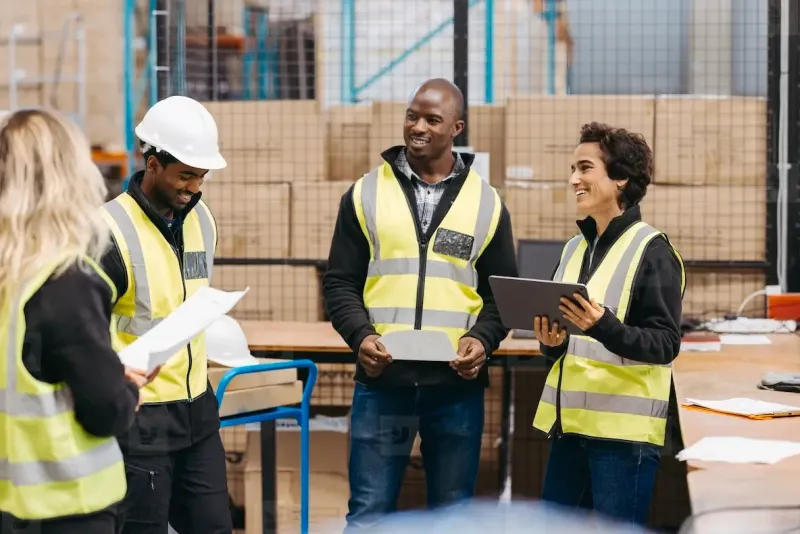
Photo: warehouse workers meeting in parking lot after shift, diverse group, organizing, via dfjx2uxqg3cgi.cloudfront.net
The Meeting Starts After the Shift Ends
It's 9 p.m. outside a fulfillment center in San Bernardino, and the parking lot is emptying out fast. Nobody calls this a union meeting — officially, it's just a handful of workers lingering by the vending machines, talking in Spanish about broken scanners, missed breaks, and a supervisor who keeps 'losing' overtime requests. But everyone here knows what it actually is.
Across the country, American labor is having a moment. Starbucks baristas are voting in cards. Amazon warehouses are filing petitions. But look closer at where the energy is thickest, and you'll notice something the national coverage keeps skipping: a lot of it is being organized en español.
Translation Isn't the Job — It's the Weapon
The old model of unionism treated Spanish speakers as a demographic to be reached. Flyers got translated. A steward might be assigned. The assumption was that the union was an English-speaking institution extending a hand downward.
The new model flips that entirely. In organizing drives from Chicago's logistics corridors to North Carolina poultry plants, Spanish isn't the outreach language — it's the strategy. Workers who live in the same apartment complexes, ride the same carpools, and send money to the same pueblos back home aren't waiting to be educated about solidarity. They're teaching it.
Consider the numbers hiding in plain sight. Latino workers now make up roughly one in five of the American workforce, and in warehousing, food processing, and construction, they're often the majority. When a bargaining unit is 70% Spanish-speaking, the contract negotiation that happens in English is a performance. The real negotiation happened weeks earlier, in a church basement, in Spanish.
The Rise of the Bilingual Steward
Ask any organizer under thirty who the real leadership pipeline is, and they'll tell you: the bilingual shop steward. These are the workers who can read a grievance filing at lunch and explain it over WhatsApp that night. They code-switch between the break room and the HR office, and that switch is power.
Unions have noticed. The UFCW, SEIU, and the Teamsters have all invested heavily in Spanish-language organizer training programs — not as diversity gestures, but because the drives that win are the ones where workers can argue about their own contract in the language they dream in.
There's a difference between being translated and being heard. The first is service. The second is power.
Gig Platforms, Same Fight
The pattern extends beyond the warehouse. App-based delivery and rideshare drivers — many of them immigrants — have built their own organizing networks through Spanish-language Telegram groups and WhatsApp chains. When a Los Angeles driver gets deactivated unfairly, the appeal strategy travels through these networks faster than any company policy memo.
These workers aren't waiting for a union to come organize them. They're building the organizing infrastructure themselves, one group chat at a time, and then inviting established unions to catch up.
What the Revolution Sounds Like
Here's what should make every boss in America nervous: the language of collective action doesn't need to be learned from a manual. It lives in the culture already. Mi gente, la lucha, no nos van a quitar lo nuestro — these aren't slogans imported from a training deck. They're inherited.
The next generation of American labor power won't look like a César Chávez photograph or a 1930s Flint sit-down. It'll look like a parking lot at 9 p.m., a group chat with 400 drivers, a contract read aloud in two languages so everyone knows exactly what they won.
La revolución vive — and lately, it's been speaking Spanish first.