The Menu Is the Manifesto: What Asylum-Seeker Pop-Up Kitchens Are Really Serving
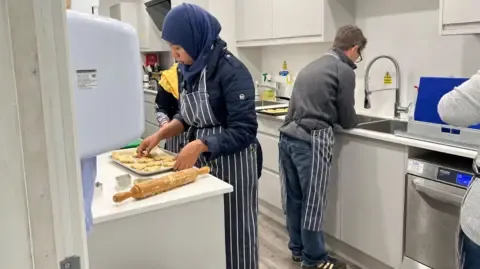
Photo: asylum seekers cooking food together in community pop-up kitchen, via ichef.bbci.co.uk
We need to retire a certain story, because it's doing real damage.
You know the one: the sympathetic-but-condescending narrative where asylum seekers are passive recipients of help, grateful mouths to feed, people to whom things are done. It's the story told in well-meaning fundraisers and soft-focus news packages. And it erases the single most interesting thing happening in immigrant communities across this country right now.
The kitchens aren't a symptom of the struggle. They're a strategy.
Follow the Money, Then Follow the Menu
Start with the economics, because critics won't. In cities from Denver to New York, pop-up kitchens staffed by newly arrived asylum seekers have moved from church basements to storefronts to farmers market stands in under two years. They generate revenue. They hire locally. And a meaningful share of that revenue — tracked in spreadsheets, not vibes — flows back into legal defense funds, bond payments for detained neighbors, and rent assistance.
I followed one such operation for a month. What I found wasn't a charity. It was a mutual aid enterprise with a political theory of change baked into its books. Every $12 plate of ropa vieja carried a margin, and every margin had a destination: a line item marked simply "defensa." Defense.
That's not survival. That's a war chest.
Solidarity Networks Run on Rice and Beans
The second thing the condescending story misses: these kitchens are nodes, not islands.
The network I traced connects cooks who arrived from Venezuela, drivers who arrived from Senegal, suppliers who've been in Texas for three generations, and church congregations that provide kitchen space in exchange for nothing more than a seat at the table. When ICE conducted sweeps in one neighborhood last spring, the kitchen's group chat doubled as an early-warning system within hours. When a family lost their housing, the weekend menu changed and the special was priced at whatever you could pay.
This is what organizers call infrastructure — the boring, durable stuff that makes movements survive winter. Food is just the entry point. The same people who coordinate a Saturday lunch service coordinate court accompaniment, know which immigration lawyers answer their phones, and can turn out forty neighbors to a city council meeting with a single voice note.
The Political Demand Hiding in Plain Sight
Here's my argument, plainly: we should stop describing these kitchens as coping mechanisms and start describing them as political actors. Because they are one.
Their platform isn't written on a website. It's written in practice:
- Work authorization now. Every cook at every pop-up is a walking argument for letting people who are here work legally instead of in legal limbo.
- End indefinite detention. The bond funds these kitchens bankroll exist because the system demands ransom for freedom. The menus are the rebuttal.
- Right to counsel. Mutual aid networks have effectively become informal paralegal pipelines because the government provides no lawyer. That's a policy failure with a ladle in its hand.
When the cooks show up at a statehouse hearing — and they do, in aprons, with the same pots they feed their neighbors with — it isn't theater. It's testimony from people running functioning institutions that the state refuses to build.
What the Rest of Us Owe
Solidarity, not charity. That distinction matters. Charity says "let me help you." Solidarity says "you're already organizing — what do you need from me?"
For readers with means, the answer is often boring: recurring donations, not one-off viral ones. Commercial kitchen access. Help navigating permits and health inspections, which fall on these operations with disproportionate weight. For readers with a vote: the kitchens have already told you their platform. Elect people who'll write it into law.
Eat First, Then Fight
There's a line I heard at one kitchen that has stayed with me: "Primero se come, después se lucha." First we eat, then we fight. It's not a resignation — it's a sequence. You cannot organize an empty stomach, and you cannot build a movement without building the people in it.
So the next time you see a pop-up kitchen run by asylum seekers, resist the urge to file it under heartwarming. File it under politics. Because the people behind the counter aren't waiting to be saved.
They're feeding the fight — and they're asking you to pull up a chair, or get out of the way.