Win the Corner, Win the Barrio: What Campaign Consultants Keep Getting Wrong About Day Laborers
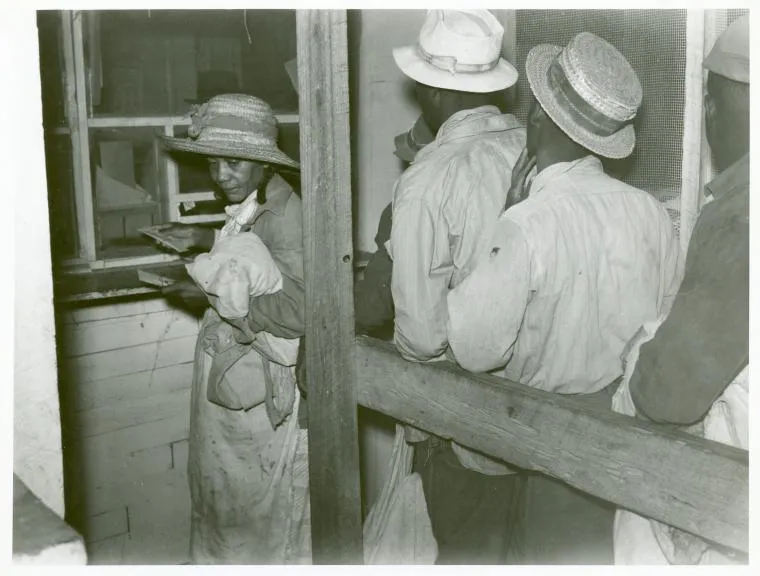
Photo: Marion Post Wolcott, Public domain, via Wikimedia Commons
The Most Efficient Canvass in America Costs Nothing
Every election cycle, city hall campaigns burn through budgets on door-knocking apps, mailers that go straight to recycling, and robocalls nobody answers. Meanwhile, there's a gathering of thirty to eighty potential voters happening every single morning at 6 a.m. in the same public location, in full view, free of charge.
I'm talking about the day laborer corner — the informal hiring site outside the Home Depot, the gas station, the lumber yard. Consultants dismiss these corners as invisible. That's their first mistake. The workers there are not only eligible voters in many cases; they're embedded in networks that reach into every household in the barrio. The aunties, the compadres, the cousins in three neighboring ZIP codes.
Why the Corner Beats the Doorstep
Door-knocking gets you ninety seconds and a closed door. The corner gets you something consultants would pay real money for: repeated, voluntary, high-trust contact. A worker waiting for a job has time. He's standing with his crew. The conversation isn't an interruption — it's how the morning goes.
And here's the part campaigns keep missing: these corners are already political spaces. Wages get compared. City policies on solicitation ordinances get debated. Workers know which councilmember tried to shut down their corner and which one showed up with coffee during a heat wave. They have opinions. They vote. And they tell everybody they know.
Look at recent municipal races in Houston, Long Beach, and Gaithersburg, Maryland — the candidates who treated the corners as communities rather than problems consistently outperformed their polling in majority-Latino precincts. Coincidence? Please.
Respect Is the Strategy
Let me be blunt about what doesn't work: showing up in October with a Spanish-language mailer translated by a machine. The corner has a memory. It remembers who came around only when they needed something.
What works is showing up in March. Buying the coffee from the panadería truck. Learning names. Showing up again in June when nobody's asking for your vote yet. The corner runs on a currency campaigns don't understand — consistency — and it punishes the transactional.
Organizations like the National Day Laborer Organizing Network have spent decades building worker centers around these corners. Smart candidates partner with them. Smarter candidates listen first and ask questions second.
What National Campaigns Should Steal
The lesson isn't really about day laborers. It's about the entire category of voters that the consultant class writes off because they don't show up in premium voter files: the informal economy, the multigenerational households, the folks whose political home is the corner and the church and the soccer league, not the email list.
National campaigns treat these voters as a turnout problem. Municipal winners treat them as a constituency. That difference — respect versus extraction — is the whole game.
The corner is where the barrio talks. If you want to win it, you don't bring a script. You bring yourself, you show up early, and you come back. La revolución vive in the places the consultants never bothered to look — usually holding a sign that says 'trabajo' and knowing exactly who deserves their vote.