Cinco Minutos y una Parada: The Riders Turning Bus Stops Into Escuelas de Lucha
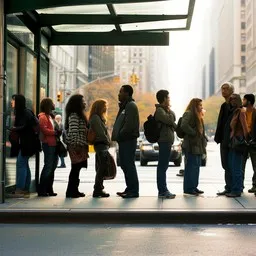
Photo: diverse commuters waiting at city bus stop morning light, via images.stockcake.com
The 6:15 bus to the food processing plant doesn't run on revolution time. Neither does the night shift at the warehouse, or the double at the restaurant, or whatever we're calling the gig economy these days. And that's exactly the problem, says Marisol Vega, a former hotel housekeeper who now organizes in Fresno's transit corridors.
"The old model says: come to our meeting, Wednesday, 7 p.m., bring your childcare," Vega told us, laughing. "¿Quién puede? Nobody I know. So we stopped waiting for people to come to us."
La Parada Política
The concept is disarmingly simple. Organizers — often riders themselves — show up at bus stops, laundromats, and metro platforms during the exact minutes working-class Latinos are already standing around with nothing to do. They call them paradas políticas: political stops. No sign-up sheet, no folding chairs, no two-hour agenda. Just a clipboard, a flyer in two languages, and a five-minute conversation that might change how someone sees their own power.
One week it's a know-your-rights briefing before an ICE sweep hits the neighborhood. The next, it's a walkthrough of a rent stabilization measure heading to the city council, or a heads-up that the county is redrawing bus routes — and that public comments close Friday.
"People think organizing means a hall, a microphone, an hour-long speech," says Jorge Tamayo, who runs paradas outside a laundromat in Houston's Gulfton neighborhood. "No. Organizing means catching Doña Rosa while her clothes dry and leaving her with one question she can't stop thinking about."
Why the Wait Works
There's a reason the bus stop beats the community center. Time poverty is the single biggest barrier to working-class participation in politics — not apathy, not fear, not lack of interest. When your day is stitched together by shifts and transfers, a two-hour meeting is a luxury good.
But the ten minutes waiting for the 42? Those minutes already belong to you.
Transit scholars have a term for these pockets — "captive time" — and organizers have learned to treat it like the resource it is. A captive audience isn't trapped; it's available. And unlike a town hall, the bus stop crowd is the exact demographic traditional organizing keeps failing to reach: the night-shift worker, the single mom with two jobs, the tío who's politically furious but institutionally invisible.
From Rider to Organizer
Ask around and you'll hear the same origin story on repeat: someone got handed a flyer, then a role.
Take Elena Duarte, 34, a caregiver in Oakland who used to ride the same AC Transit line twice a day in silence. A parada organizer noticed she always had opinions — sharp ones — about the route cuts. Within a month, Duarte was the one holding the clipboard. Within six, she was testifying at a transit board meeting in her work scrubs.
"I didn't become an organizer at a training," she says. "I became one standing at a bus stop, being treated like my ten minutes mattered."
That's the quiet genius of the model: it lowers the entry bar to almost nothing. You don't join a parada. You just... talk. And the next step reveals itself.
The Toolkit: Start Your Own Parada
Thinking about bringing the parada política to your corner? Organizers we spoke to shared a remarkably consistent playbook:
1. Go where people already wait. Bus stops, laundromats, check-cashing spots, the line outside the DMV. Don't create a gathering — borrow one.
2. Respect the clock. Five minutes, max. If they miss their bus because of you, you've lost them forever.
3. One ask, one handout. A single action — sign, show up, call this number. Bilingual, always.
4. Recruit the regulars. The person you see every morning at 6:15 is your future co-organizer. Say so.
5. Follow up where they live. WhatsApp groups, not email lists. The parada continues on the phone between shifts.
6. Bring the win back. Nothing builds a parada like a victory people can point to: the route saved, the landlord cited, the council member who showed up.
The Long Game
Nobody's pretending a bus stop conversation topples a system. But movements aren't built in single dramatic moments — they're built in accumulated minutes, in the slow conversion of waiting time into organizing time.
Vega puts it plainly: "La revolución no espera a que tengas tiempo libre. She catches the bus with you."
The 6:15 is pulling up now. Doña Rosa has her flyer. And somewhere down the line, another parada is already forming — five minutes at a time, corner by corner, rider by rider.
La revolución vive. And these days, she commutes.