Sunday Service, Monday Solidarity: The Churches ICE Can't Shut Down
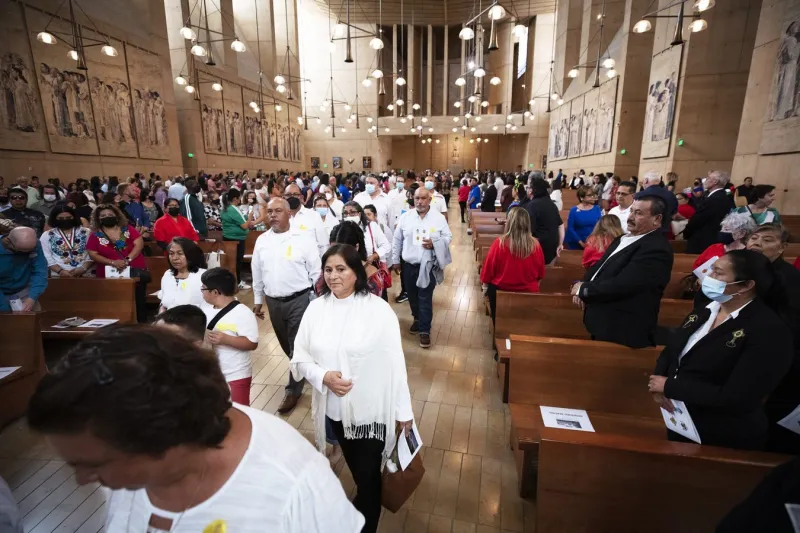
Photo: immigrant community gathering inside church parish hall volunteers, via angelusnews.com
Every few months, another secular advocacy group announces a 'new' rapid-response network for immigrant families. Hotlines, text trees, know-your-rights cards. Meanwhile, in a storefront Pentecostal church in a strip mall outside Raleigh, that network has existed for twenty years. It's called a congregation.
Here's the uncomfortable truth the movement keeps avoiding: when the state comes knocking, the nonprofit can lose its funding, the activist group can lose its meeting space, the app can lose its funding round. But a church answers to a higher authority than a city contract. That makes it the last strategic high ground — the one institution that's genuinely hard to shut down.
The Sanctuary Playbook, Updated
The concept isn't new. The 1980s sanctuary movement hid Central American refugees in mainline Protestant churches, and the tradition stretches back further than anyone's press release. What's changed is the scale and the speed. Today's version isn't just one family sleeping in a church annex. It's a distributed system: the parish hall that doubles as a legal clinic on Tuesdays, the church van driver who knows which routes to avoid, the pastor whose Sunday announcement doubles as an emergency alert.
In Houston, a network of evangelical congregations coordinates rides to immigration check-ins through WhatsApp groups run by deaconas — grandmothers with minivans and flawless logistics. In Chicago, a Catholic parish keeps its basement stocked as a standing shelter, no activation required. This is mutual aid with a liturgy.
Why Secular Organizers Keep Fumbling It
Too many progressive organizers treat churches as venues to rent, not partners to defer to. They show up asking the congregation to join their campaign, bringing clipboards and a worldview that treats faith as decoration rather than engine. Then they wonder why turnout fizzles.
The mistake is philosophical. For many immigrant families, the church isn't adjacent to community life — it is community life. It's where trust was built over decades, where people's kids were baptized, where a promise made at the altar actually binds. An organizer who hasn't earned standing in that room is an outsider with good intentions and no permission.
The ones who get it right do something harder: they show up, they sit down, and they let pastoral leaders set the terms. They understand that the moral vocabulary of the pulpit — welcome the stranger, love your neighbor — isn't a translation of the movement's message. It's the original version.
Fe Is Not a Weakness
There's a reflex in secular left spaces to be squeamish about faith, to want the movement sanitized of religion. That reflex is a luxury. When federal agents are outside the bodega, nobody's vetting the theology of the person offering a hiding place.
Fe y fuego. Faith and fire. The revolution has always had hymns. The smartest thing this movement can do is stop pretending otherwise — and start treating the people holding the keys to the parish hall as the strategic leaders they already are.