La Junta Escolar No Es Aburrida: How Parents Are Winning the Elections Nobody Watches
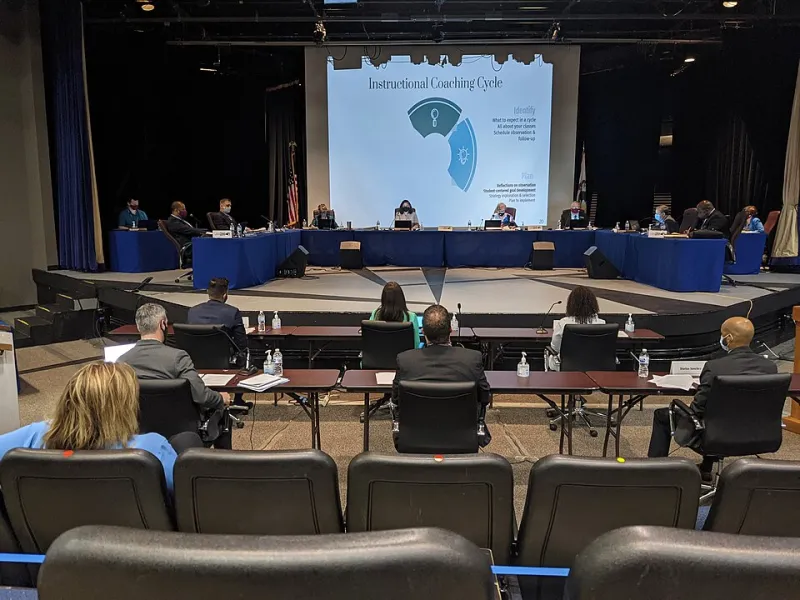
Photo: Mysterymanblue, CC0, via Wikimedia Commons
Nobody puts a school board race on a t-shirt. There's no rally, no bus tour, no celebrity surrogate. Just a name on a ballot buried below the flashy races, in a font size that seems designed to be ignored.
And that's exactly why the movement is winning there.
The $500 Campaign That Scared a District
In a suburb outside Phoenix, Marisol Vega spent $487 on her school board run. Half went to flyers printed at a shop owned by a friend's cousin. The rest bought gas and a box of paletas for volunteers who knocked doors in 108-degree heat.
Her opponent, an incumbent with a campaign war chest and a mailer budget, lost by eleven points.
"People kept asking me, 'Why would you want that job? It's volunteer, it's thankless, it's two hours of budget spreadsheets a week,'" Vega told us over the phone, still a little stunned by her own margin. "I said, exactly. That's why nobody's watching the door. So we walked through it."
Once seated, she did what the movement does: she showed up with receipts. She pushed back on a proposal to expand the district's contract with a private security firm that had been sharing student discipline data with local ICE liaisons. She brought parents — bilingual parents — to public comment in numbers the board had never seen. The contract expansion died in committee.
Books, Budgets, and the Long Game
The pattern is repeating in states that couldn't be more different on paper.
In rural Georgia, a group of mothers — some Black, some Latina, a few white church ladies who surprised everyone including themselves — organized against a wave of book challenges targeting titles with Latino and Black protagonists. They didn't show up to scream at board meetings. They showed up with a spreadsheet: every challenged book, every author, every student who'd checked it out, with a note from the family. Boards can argue with outrage. It's harder to argue with a binder.
In a Central Valley town in California, a former farmworker named Rogelio ran for board in a district where budget cuts were quietly gutting the dual-language program — the very program that had taught his own kids to read in two languages. He won by 90 votes in an election where fewer than a quarter of registered voters participated. His first act: restoring translation services at board meetings, so parents who don't speak English could finally understand what was being decided about their children.
"They counted on us not knowing," he said. "So step one was making sure we know. Step two was making sure they know we know."
Why the Movement Keeps Skipping the Big Race
Here's the strategic logic that consultants still struggle to sell: a presidential campaign costs billions and delivers a single winner who then has to navigate a Congress designed for gridlock. A school board seat costs a tank of gas and delivers a vote — a real, binding vote — on police in hallways, on curriculum, on how a district responds when federal immigration agents come asking for student records.
Multiply that seat by a few thousand districts and you get something no executive order can undo.
The movement's organizers figured this out the same way they figure out most things: out of necessity. When the big races felt unwinnable, they looked at what was actually on the ballot in front of them. Turns out the least sexy election in America controls the buildings where their kids spend seven hours a day.
How to Flip One in Your Town
The playbook, distilled from the three campaigns above, is almost embarrassingly simple:
Show up before you run. Vega attended board meetings for eight months before filing. By the time her name was on the ballot, half the district already knew her face.
Knock where nobody knocks. The precincts campaigns skip — the apartment complexes, the trailer parks, the neighborhoods where people work two jobs — are where school board elections are actually decided, because turnout is so low that fifty votes can swing a seat.
Talk in lunchboxes, not jargon. Nobody's kid is affected by "curricular alignment frameworks." Everybody's kid is affected by whether the librarian gets fired or the bus route gets cut.
Bring people who've never been asked. Rogelio's volunteers registered voters at laundromats and swap meets. Many of those voters had never cast a ballot in a local election. They cast one for him.
The Revolution Gets a Committee Seat
La revolución vive — but sometimes it lives in a beige conference room with a bad sound system, voting 4–2 to keep a dual-language program funded.
That's not a compromise of the movement. That's the movement, grown up, holding the pen instead of the sign. The parents flipping these seats aren't chasing glory. They're doing what our communities have always done: taking the tools available and building power with them.
The next election cycle will bring another round of screaming about the big races. Meanwhile, in a district near you, someone is filing paperwork for a seat nobody's watching.
The question is whether it'll be one of us.